
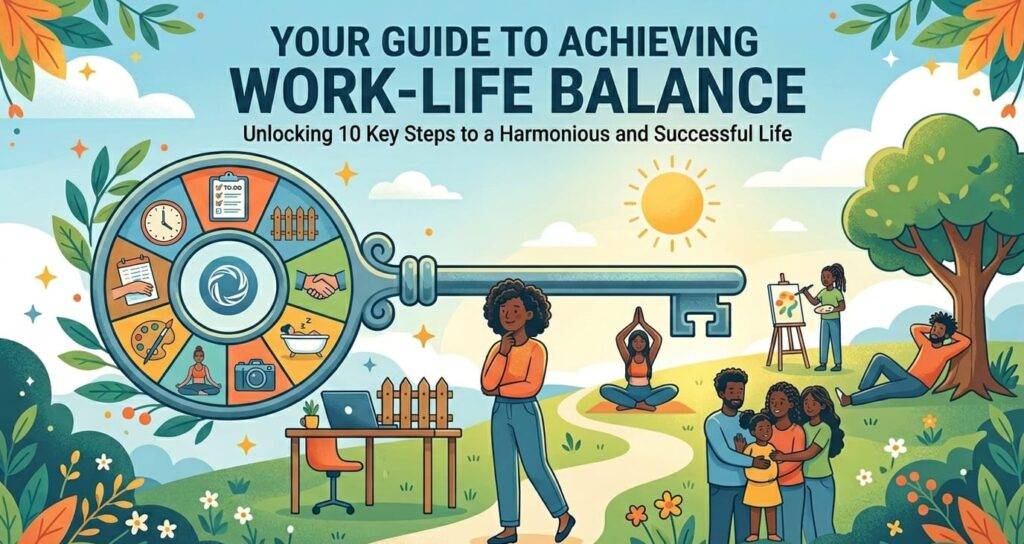
Maintaining a healthy work–life balance is essential for productivity, wellbeing and long
term career success. Here are ten practical tips to help you create a better balance
between your professional and personal life.
- Set Clear Boundaries
Establish specific working hours and stick to them whenever possible. Avoid checking
emails or responding to work messages during your personal time to prevent work from
taking over your life. - Prioritise Your Tasks
Not every task requires immediate attention. Focus on high-priority activities first and learn
to distinguish between urgent and important responsibilities to manage your time more
effectively. - Learn to Say No
Taking on too many commitments can lead to stress and burnout. Be realistic about your
capacity and do not hesitate to decline additional responsibilities when your schedule is
already full. - Schedule Personal Time
Treat personal activities with the same importance as work meetings. Whether it is
spending time with family, exercising or pursuing a hobby, make time for activities that help
you recharge. - Take Regular Breaks
Short breaks throughout the day can improve concentration and reduce fatigue. Stepping
away from your workspace for a few minutes can help you return with renewed focus and
energy. - Practice Effective Time Management
Use calendars, planners or productivity tools to organise your day. Planning ahead helps
reduce last-minute stress and allows you to maintain a better balance between work and
personal commitments. - Switch Off from Technology
Constant connectivity can make it difficult to disconnect from work. Set aside periods each
day when you turn off notifications and focus on your personal life without digital
distractions. - Focus on Your Health
Regular exercise, a balanced diet and sufficient sleep are critical for both physical and
mental wellbeing. A healthy lifestyle can increase energy levels and improve overall
performance. - Delegate When Possible
You do not have to do everything yourself. Delegating tasks at work or sharing
responsibilities at home can free up valuable time and reduce unnecessary stress. - Review and Adjust Regularly
Work–life balance is not a one-time achievement. Regularly assess your schedule,
workload and personal commitments to identify areas where adjustments may be needed.
Final Thoughts
Achieving a healthy work–life balance requires intentional effort and ongoing adjustments.
By setting boundaries, managing your time wisely and prioritising your wellbeing, you can
create a healthier and more fulfilling lifestyle both inside and outside of work.